
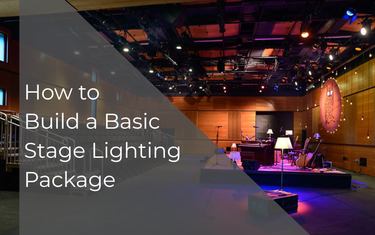
A small-scale basic stage lighting package requires fixtures, control gear, cabling, and mounting hardware to light a performance safely and effectively. A realistic budget for an entry-level, professional-grade stage lighting setup is $4,000 to $8,000. This would be perfect for venues such as smaller comedy clubs or bars with small performance stages. Here's a simple guide to exactly what you'll need.
#1: Fixtures
For a small stage or venue, we recommend 6 to 8 fixtures for a basic small-scale lighting setup. This would go as follows:
2 Front Lights: Place these on opposite sides to light the faces of performers without harsh shadows.
2 Back Lights: Use these to separate performers from the background and add depth.
2 to 4 Wash or CYC Lights: Position these to add color and mood across the stage floor or backdrop.
A beginner should start with a combination of PARs and Ellipsoidals, as they form the foundational backbone of stage lighting before moving on to complex automated fixtures.
LED PAR Cans
What they do: Flood the stage with smooth color washes and general illumination.
Why for Beginners: LED PARs are affordable, durable, and draw very little power. They have built-in color mixing, meaning you do not need physical color gels, and they are incredibly simple to configure via DMX control.
LED Ellipsoidals / ERS
What they do: Cast a sharp, precise beam of white light to illuminate a speaker, actor, or musicians face.
Why for Beginners: They allow you to frame light precisely to the stage edges using internal shutters, keeping light off walls or projector screens. Modern LED versions stay cool to the touch and skip the hassle of high-heat lamp replacements.
#2: Control Gear
Lighting Console or DMX Controller: Sends signals to manage color, brightness, and movement.
Dimmer Packs or Power Distribution: Regulates electricity sent to traditional non-LED fixtures.
DMX Cables: Transmit control data between the console and the lights (standard 3-pin or 5-pin XLR).
#3: Cabling
Control cables, power cables, and a DMX terminator are essential components of a basic lighting package.
DMX Control Cables
DMX cables connect your lighting controller to your fixtures and allow them to communicate. Fixtures typically use 3-pin or 5-pin DMX cables. Always use true DMX cables rather than microphone cables to prevent signal issues.
Power Cables
Lighting fixtures may use IEC, PowerCON, or similar power connections. Some fixtures allow power to be linked from one light to another, reducing the number of extension cords needed.
DMX Terminator
A DMX terminator plugs into the last fixture in the DMX chain to help prevent signal interference, flickering, and other control issues.
#4: Mounting Hardware and Rigging
Lighting Stands, T-Bars & Trussing
Stands and trussing safely elevate and support lighting fixtures. T-bars can hold multiple fixtures on a single stand.
Mounting Clamps
C-clamps and O-claps securely attach fixtures to pipes, stands, or trussing. Make sure the clamp is properly sized for the mounting surface.
Safety Cables
Fixtures hung overhead should always have a steel safety cable as a secondary attachment to help prevent falls.
Need help building your first basic stage lighting package? Reach out to our knowledgeable sales staff today to get personalized help


